I haven't posted in several days but not because I haven't anything to say. It's quite the opposite actually and I have so many thoughts that I'm not sure how to organize all of them into one post. We are just hours away from Christmas Day and I'm alone for Christmas this year. It's not the first time and it won't be the last, yet amidst a great deal of chaos in my life right now, I feel a sense of peace that I never expected.
Nearly 15 years ago while in my freshman year of college, I developed a fatigue that can only be described as what you feel when you have the flu and you just can't get out of bed. I was exhausted by the smallest tasks. Simply getting dressed and having breakfast warranted a nap afterward; on one particular day, a nap that lasted 6 hours. After several days or a few weeks feeling this way, I would feel quite the opposite. I felt a new energy as if I'd finally found my individual place in the world and I had joy unlike any other. I wanted to jump for joy and move with this new breath of fresh air so I exercised unceasingly. The rush just felt so good!
In just a short period of time though, the dark days of fatigue would return. I sat in my room and cried for hours on end without any knowledge of why I was crying. I was convinced that I was worthless and every moment of pain that I'd ever felt overwhelmed me in that moment. I eventually went to the doctor for help and after several additional weeks of chaotic mood swings, a complete loss of ability to function, and hospitalization, I was diagnosed with
bipolar disorder. I was told that this disease could not be cured and that I would have to take medication for the REST OF MY LIFE. At 18 years old, this seemed like a death sentence.

I currently take 5 different medications every night to manage my bipolar disorder. While the medication side of things seems overwhelming, living life has proven to be a much greater challenge. I've spent literally thousands of dollars and hundreds of hours in therapy learning how to accept the diagnosis and how to manage my thoughts and behaviors in everyday life. As you can imagine, it has NOT been easy.
When I was first diagnosed, there was such a stigma attached to mental illness that my family expected that I not speak a word of it to anyone. We were a strong, black, family of women and we can't have anyone thinking that I was crazy!
In recent years, the word "bipolar" has become more of a slang term. Everyone knows someone that they say must be bipolar because the person is in a fine mood one moment then irritable the next. The word "bipolar" has become synonymous with "bitchy", and I hate that because if anyone really knew what life is like living with this beast, they would never say something so insulting! After all, if you're frustrated with someone, do you say, "...they're such a pain in the butt that that they must be an AIDS patient?"
In addition to trying to change the public's perspective, people with bipolar disorder struggle greatly with the relationships in their lives and often struggle to maintain employment, and for some, have so lost their ability to function that they are either hospitalized or considered disabled and must rely on disability and public assistance to maintain their lives and health. I have been hospitalized twice. I've struggled with keeping a steady job in the past and at 2 years and 4 months, am currently thankful to God that I am enjoying the longest term of employment that I've had since I graduated from college in 1998.
My bipolar disorder has caused great strife in the relationships in my life, particularly with my family. At times when I’ve joined my family for the holidays, the mood has been tense, and recently I’ve begun to be excluded from some gatherings altogether. I was told that things are "always uncomfortable" for everyone when I’m around. When a person is diagnosed with bipolar disorder, it is a diagnosis not just for that person, but for all of those around them, particularly those that say that they love them.
I love my family and have done everything that I can think of to educate them about bipolar disorder, and encourage them to participate in family counseling but have not been successful. So, I’ll spend this Christmas with Sydney, Sammy, a stack of DVD’s, and with my boyfriend on the phone. We have a long distance relationship and just weren’t able to spend Christmas together this year.
It’s a tough time, but as I said earlier, it’s not the first time that I've spent Christmas alone, and I’m sure that it won't be the last. What’s important is that I choose to fight this disease with or without the support of those closest to me. I have a great doctor, and a support group sponsored by the Depression and Bipolar Support Alliance (DBSA). Being a part of the group helps me to see that I’m really not alone at all, that there are others out there that experience life as I do, and most of all, that as long as I keep fighting, I’ll keep winning this battle. I will have a life of my own as I AM NOT BIPOLAR; I am an individual diagnosed with bipolar disorder, and I am not defined by my disease.
African-Americans are least likely of any race to seek treatment for mental illness. There are many helpful organizations out there that provide resources for patients and families. In my opinion, these are some of the best:
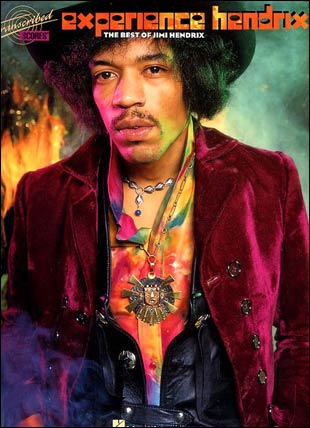
They were all diagnosed with bipolar disorder!
There is no great genius without a mixture of madness.
~Aristotle
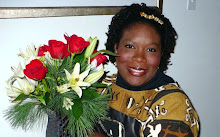


 Here I am freshly washed at week four. I've been faithfully braiding and banding and washing my hair once a week with the Sisterlock Starter Shampoo. I haven't taken any elaborate steps in styling so far. I usually go either freestyle, maybe with a headband that only goes around the top of my head, and of course there are my favorite Caruso curlers. I don't want to manipulate my baby locks too much and I find that the steam from the Caruso curlers is enough to moisturize and soften my hair.